And the hits just keep on coming. Consumer Reports just released a report that finds 76 percent of consumers will be cutting back on their holiday spending (click here to read). Outdoor Industry Association reports outdoor retailer sales, long argued to be recession-proof, are now taking lumps, too (click here to read). And, the National Retail Federation issued a November report that showed cargo volume at major U.S. retail container ports fell again in October and hit their lowest levels since 2004 (click here to read).
In an email notice to his retail clients, Pruitt wrote, "Business may be down by 30 percent, but remember, 70 percent of customers are still shopping. Keep your focus on these customers." Which is very good advice, considering that Pruitt sees the economic downturn lasting well into 2009. "We actually started seeing a retail slowdown starting during the April/May period of 2007. Typically, these cycles last 18 to 20 months, which meant we were anticipating a rebound just in time for the holidays this year," Pruitt told us. "But five weeks ago, the dream of a holiday rebound was shattered with further financial unraveling that was unprecedented, meaning we are in a double dip -- back into another 18- to 20-month cycle of slowing retail trends.
"Pruitt said he hopes that this second cycle will last less than the typical 18 to 20 months, shortening to 12 months, but he admits everyone is in uncharted territory now. He did point out bright spots and opportunities, though. Retailers with strong vendor relationships have been able to work with those companies to discount in-stock merchandise, trim or cancel existing orders, and work to extend terms. Of course, vendors are also feeling the economic pinch, so their support can and will continue only for so long. The most important steps a retailer can take immediately are:
Minimize excess inventory risk now. While the holidays may generate a small sales lift, immediately following the holidays, business will likely slow as everyone tries to liquidate inventory.
Adjust your merchandising style. With the inventory you do have, work to flow it onto the floor and onto shelves in smaller amounts to keep your store looking fresh with new inventory. It will give those consumers who are still shopping a reason to keep checking back in.
Get a handle on inventory. Have a very good understanding of how much inventory you now own, and how much you will need in the future. You have to be able to maintain sufficient inventory on hand to be able to buy into margin on a consistent basis. It used to be that 10-percent open-to-buy levels were sufficient. The new rule of thumb is 25 percent.
Be realistic with your inventory management. Once you determine what your reasonable sales targets will be, and how much inventory you will need to achieve those targets, plan down, not up from there. Be conservative!
Be flexible and responsive. Where it may have been traditional to manage retail inventory in terms of monthly performance levels, in this economic climate, retailers need to shift to weekly reviews of inventory levels and manage accordingly.
Keep expenses in check. This is perhaps the most challenging aspect for smaller retailers who do not enjoy the capital backing of larger or public companies. When sales start dropping quickly, it is very difficult to push expenses down fast enough to compensate and doing so without the proper strategy can put a company at risk simply because it is eating the bottom out of its business.
Grow your gross profit dollars. One way to ensure cash flow that will keep a retail business healthy even in a depressed sales market is to ensure you are able to create more gross profit dollars by building higher initial markups and minimizing your inventory markdowns. As a guide, Pruitt has developed a formula: "For every one point of additional maintained markup (M/M), you will need to increase your in-season open-to-buy (OTB) by 5 points. So, if you want to increase your M/M by 5 percent, you need to increase your in-season OTB by 25 percent to be able to execute your plan, going after off-priced and immediate buys."
Pruitt pointed out that there are huge opportunities for stronger businesses in this economic climate, but retailers need to be sure they are positioned to take advantage of those opportunities as they come along. And, he adds, the opportunities are going to be coming fast and furious in the form of distressed merchandise, bankruptcies and more. It is also a great time to negotiate leases at low rates and build out stores at a much lower cost. He said he believes these opportunities will last for another year.
Tuesday, November 11, 2008


Monday, November 10, 2008
Industry Must Lead Toward Sustainable Economy: Panel
NEW YORK, N.Y. -- In his acceptance speech Tuesday night, President-Elect Barack Obama acknowledged a planet in peril and global economy in tatters.
Yet he didn't connect the two crises.
"We cannot think about these two issues separately," Mindy Lubber, president of Ceres, told business leaders gathered for the opening of the Business for Social Responsibility (BSR) conference Wednesday. "They have got to be integrated."
The business community needs to take on a leadership role in addressing societal problems by incorporating sustainability into their economic policies, according to Lubber and a group of experts gathered as part of a panel discussion on how the economic crisis and presidential election will impact sustainability and industry.
They must look beyond short-term financial performance to the bigger picture, the panelists said. And despite the historic election and Obama's promise to foster a green economy, the business community must not wait for government to come to the rescue.
"Barack Obama is not the only person who has an opportunity to capture the mantle of leadership and take us in a positive direction," said Aron Cramer, BSR president and CEO. "Everyone in this room holds in her hands or his hands the very same opportunity to demonstrate leadership and take the passion for sustainability we all have ... and to be part of the story of how we build economic recovery that points in the right direction not only in the next two, three or four quarters, but over the next two, three, or four decades."
Cramer agreed that times were tough but urged attendees to rise to the challenges before them.
"If we are going to navigate a more punishing business environment, we who believe in sustainable business have to make the case that it's an essential piece of a strong economy," Cramer said.
In order to do that, he offered three three prescriptions: concentrate on the long-term, focus on value and think big.
"We have very strong short-term pressures but we have to make sure that we and all of our companies and all of those with whom we work stay focused on the long-term trends that really are shaping our world and remain very dynamic," Cramer said.
The economic downturn creates a stronger need to demonstrate that corporate social responsibility brings value to business and society, he said. Businesses need to think big by honing in on the systemic and collaborative solutions that go beyond the limitations of what an individual company can achieve.
"In fact, in a difficult economy, collaboration is often the efficient choice," Cramer said. "It's a way to leverage the power of individual companies by acting together. This is especially true on supply chains, which is why we've seen so many industry groupings come together to try to make progress jointly."
Lubber of Ceres, a coalition of investors, environmental and public interest groups, argued that building a sustainable economy is impossible if businesses continue to ignore resource challenges. She pointed to two examples of bold and practical actions companies can take to integrate sustainability into their business models.
"I want to issue a challenge to all of us and that is that we move towards universal, mandatory reporting," Lubber said. "Why (should) these issues be voluntary, why (should) they be a burden that you all share but not your competitors?"
American companies need to "scale up," she said.
"What we do in the United States needs to be exported to other countries," Lubber said. "We need to make sure our products, our facilities and our employees are part of the solution. We need to integrate principles that we apply here to our supply chain."
Panelists George Kell, executive director of the United Nations Global Compact, and Kumi Naidoo, secretary general and CEO of CIVICUS: World Alliance for Citizen Participation, called on governments and businesses to recognize and address the "imbalances" with which we live.
"The leadership that is required for governments, businesses and civil society right now is for us to be able to recognize that this world is out of balance and that we have to recognize that finding the answers to re-balance this world is going to be difficult," Naidoo said. "But if there is political will, this can be achieved."
Naidoo advised the business community to align itself with the civil society and push the new Obama administration to turn the campaign rhetoric into action.
"As somebody coming from the developing world, we have a lot of optimism ... for what you achieved yesterday but we are also not naive," said Naidoo, a South African native. "People and leaders only change when there is constant vigilance, constant pressure and people are willing to step up."
Yet he didn't connect the two crises.
"We cannot think about these two issues separately," Mindy Lubber, president of Ceres, told business leaders gathered for the opening of the Business for Social Responsibility (BSR) conference Wednesday. "They have got to be integrated."
The business community needs to take on a leadership role in addressing societal problems by incorporating sustainability into their economic policies, according to Lubber and a group of experts gathered as part of a panel discussion on how the economic crisis and presidential election will impact sustainability and industry.
They must look beyond short-term financial performance to the bigger picture, the panelists said. And despite the historic election and Obama's promise to foster a green economy, the business community must not wait for government to come to the rescue.
"Barack Obama is not the only person who has an opportunity to capture the mantle of leadership and take us in a positive direction," said Aron Cramer, BSR president and CEO. "Everyone in this room holds in her hands or his hands the very same opportunity to demonstrate leadership and take the passion for sustainability we all have ... and to be part of the story of how we build economic recovery that points in the right direction not only in the next two, three or four quarters, but over the next two, three, or four decades."
Cramer agreed that times were tough but urged attendees to rise to the challenges before them.
"If we are going to navigate a more punishing business environment, we who believe in sustainable business have to make the case that it's an essential piece of a strong economy," Cramer said.
In order to do that, he offered three three prescriptions: concentrate on the long-term, focus on value and think big.
"We have very strong short-term pressures but we have to make sure that we and all of our companies and all of those with whom we work stay focused on the long-term trends that really are shaping our world and remain very dynamic," Cramer said.
The economic downturn creates a stronger need to demonstrate that corporate social responsibility brings value to business and society, he said. Businesses need to think big by honing in on the systemic and collaborative solutions that go beyond the limitations of what an individual company can achieve.
"In fact, in a difficult economy, collaboration is often the efficient choice," Cramer said. "It's a way to leverage the power of individual companies by acting together. This is especially true on supply chains, which is why we've seen so many industry groupings come together to try to make progress jointly."
Lubber of Ceres, a coalition of investors, environmental and public interest groups, argued that building a sustainable economy is impossible if businesses continue to ignore resource challenges. She pointed to two examples of bold and practical actions companies can take to integrate sustainability into their business models.
"I want to issue a challenge to all of us and that is that we move towards universal, mandatory reporting," Lubber said. "Why (should) these issues be voluntary, why (should) they be a burden that you all share but not your competitors?"
American companies need to "scale up," she said.
"What we do in the United States needs to be exported to other countries," Lubber said. "We need to make sure our products, our facilities and our employees are part of the solution. We need to integrate principles that we apply here to our supply chain."
Panelists George Kell, executive director of the United Nations Global Compact, and Kumi Naidoo, secretary general and CEO of CIVICUS: World Alliance for Citizen Participation, called on governments and businesses to recognize and address the "imbalances" with which we live.
"The leadership that is required for governments, businesses and civil society right now is for us to be able to recognize that this world is out of balance and that we have to recognize that finding the answers to re-balance this world is going to be difficult," Naidoo said. "But if there is political will, this can be achieved."
Naidoo advised the business community to align itself with the civil society and push the new Obama administration to turn the campaign rhetoric into action.
"As somebody coming from the developing world, we have a lot of optimism ... for what you achieved yesterday but we are also not naive," said Naidoo, a South African native. "People and leaders only change when there is constant vigilance, constant pressure and people are willing to step up."
Tuesday, November 4, 2008

Locals Photographer #2 - Before the Snow
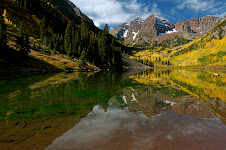
The snow is coming down - 12"-24" expected in the Wasatch Front. Just before it came, our Local Photographer #2 was able to snap some last minute pictures of the fall foliage.
I am thinking (hoping) that this storm provides our blanket of snow which all future storms will begin to accumulate upon.
Ski season is upon us and if you aren't already in ski-season shape, it may be too late. Pre-season skinning is only a few weeks away so heavy leg workouts at the Local gym are necessary!
See you on the squat racks!
Be Environmentally Cool
Head Local
Green Local


I am thinking (hoping) that this storm provides our blanket of snow which all future storms will begin to accumulate upon.
Ski season is upon us and if you aren't already in ski-season shape, it may be too late. Pre-season skinning is only a few weeks away so heavy leg workouts at the Local gym are necessary!
See you on the squat racks!
Be Environmentally Cool
Head Local
Green Local


10 Tips To Maximize Holiday Sales
In its countdown to the holidays, SmartReply, a retail marketing firm, offered 10 strategies to implement to maximize sales. The tips are designed to improve retailers' knowledge of their customers' media habits to create integrated marketing campaigns that speak their language.
1. Prep your program and build your database. As you prepare to launch a holiday campaign, start cleansing your data, reactivating inactive customers and soliciting opt-ins. Be sure that your customer data is up to date, error free and complete.
2. Speak your customers' language. Get a handle on how your customers use new media (i.e., email, mobile device, TV, etc.), which channels they interact with daily, how and when they use them. Keep your brand theme consistent across all channels, and customize the message to match the channel's capabilities to ensure relevance and increase customer's convenience. Keep registration or opt-in easy, requiring only one or two clicks to reach the designated page.
3. Create an integrated marketing campaign. Design a marketing campaign that engages customers through the channels of their choice at times when it is most relevant for them. Send emails during what your data shows are peak times when they open their messages. Understand your customers' attitudes, lifestyles and behaviors, and maximize their needs in your message and in the channels you use.
4. Permission granted, don't wait. When a customer opts in to receive communications from you, don't wait. Set up business rules to generate an immediate or near immediate response through the same channel they opted in to. Engage them more readily by using a soft introduction rather than a hard sale. For example, thank them for opting in, remind them what they opted in for, and then summarize in a couple sentences the great merchandise they can buy in your store or on your website.
5. Engage them. Today's customer likes to be engaged and involved. They want to feel that they are an important part of the relationship and the product choices they make.
6. Help them manage their lives. Customers want to interact with brands that help organize their lives. Offer to remind them about your sales. Let them know when you receive a new shipment of their favorite merchandise or brand and give them advance notice before the public is informed. Alert them when a coupon is about to expire and ask if they'd like an extended deadline.
7. Customize, localize, revitalize. To avoid media fragmentation, make your message stand out enough to capture your customers' undivided attention. Use everything at your disposal to create ultimate relevance -- media channel, geography, demographics, behavior, even local, regional or national news headlines. Target your customers' emotional hot buttons; aim to solve a problem they're struggling with; or fulfill a need.
8. Encourage them to share. Encourage and incentivize your customers to share your message and promotion with their friends and family. Coupons, surveys, blogs, games, even photos of the hottest products -- if it's important to them, they'll share it. It costs you nothing and you have everything to gain.
9. Come full circle. Customers active via multiple channels result in longer brand engagement, deeper interaction, higher spending and higher customer lifetime value. For instance, encourage customers to sign up for email alerts on your website. Hang a sign in your storefront window or at the cash/wrap counter displaying an offer message with your web URL and a text opt-in short code. The deeper the relationship, the more likely your customers will be engaged for the long haul.
10. Keep it going. Even when the holidays are over, the valuable relationships you have with your customers needs to be nurtured to keep going. Since your brand is fresh in their mind, continue to keep them engaged. Search your campaign results for nuggets of information you can continue to act on. Once you have a good understanding of your customers' holiday behavior, take the next step and continue to build your relationships all year long.
1. Prep your program and build your database. As you prepare to launch a holiday campaign, start cleansing your data, reactivating inactive customers and soliciting opt-ins. Be sure that your customer data is up to date, error free and complete.
2. Speak your customers' language. Get a handle on how your customers use new media (i.e., email, mobile device, TV, etc.), which channels they interact with daily, how and when they use them. Keep your brand theme consistent across all channels, and customize the message to match the channel's capabilities to ensure relevance and increase customer's convenience. Keep registration or opt-in easy, requiring only one or two clicks to reach the designated page.
3. Create an integrated marketing campaign. Design a marketing campaign that engages customers through the channels of their choice at times when it is most relevant for them. Send emails during what your data shows are peak times when they open their messages. Understand your customers' attitudes, lifestyles and behaviors, and maximize their needs in your message and in the channels you use.
4. Permission granted, don't wait. When a customer opts in to receive communications from you, don't wait. Set up business rules to generate an immediate or near immediate response through the same channel they opted in to. Engage them more readily by using a soft introduction rather than a hard sale. For example, thank them for opting in, remind them what they opted in for, and then summarize in a couple sentences the great merchandise they can buy in your store or on your website.
5. Engage them. Today's customer likes to be engaged and involved. They want to feel that they are an important part of the relationship and the product choices they make.
6. Help them manage their lives. Customers want to interact with brands that help organize their lives. Offer to remind them about your sales. Let them know when you receive a new shipment of their favorite merchandise or brand and give them advance notice before the public is informed. Alert them when a coupon is about to expire and ask if they'd like an extended deadline.
7. Customize, localize, revitalize. To avoid media fragmentation, make your message stand out enough to capture your customers' undivided attention. Use everything at your disposal to create ultimate relevance -- media channel, geography, demographics, behavior, even local, regional or national news headlines. Target your customers' emotional hot buttons; aim to solve a problem they're struggling with; or fulfill a need.
8. Encourage them to share. Encourage and incentivize your customers to share your message and promotion with their friends and family. Coupons, surveys, blogs, games, even photos of the hottest products -- if it's important to them, they'll share it. It costs you nothing and you have everything to gain.
9. Come full circle. Customers active via multiple channels result in longer brand engagement, deeper interaction, higher spending and higher customer lifetime value. For instance, encourage customers to sign up for email alerts on your website. Hang a sign in your storefront window or at the cash/wrap counter displaying an offer message with your web URL and a text opt-in short code. The deeper the relationship, the more likely your customers will be engaged for the long haul.
10. Keep it going. Even when the holidays are over, the valuable relationships you have with your customers needs to be nurtured to keep going. Since your brand is fresh in their mind, continue to keep them engaged. Search your campaign results for nuggets of information you can continue to act on. Once you have a good understanding of your customers' holiday behavior, take the next step and continue to build your relationships all year long.
Consumers Hunker Down - Latest Forecasts
It's starting to become a broken record: Consumers are feeling pressure from higher food and fuel prices, from the housing market meltdown and the financial industry upheaval, and from credit crunches and approaching holiday stress.
Consumers hunker downBrand Keys says it expects to see sales decline by some 5 percent for the upcoming holiday season. Based on a survey of 16,000 consumers across all nine census regions, the New York-based brand and customer loyalty research consultancy finds that 35 percent say they plan to spend less on this year's shopping -- shelling out an average of about $775.
That estimate is decidedly more downbeat than projections recently released by the National Retail Federation, which is predicting a small increase of 1.9 percent, with shoppers spending an average of $832.36 on holiday-related shopping.
The International Council of Shopping Centers just released its forecast, calling for a gain of 1.7 percent. And last week, NPD Group predicted flat-to-declining sales.In short, cash-strapped consumers are hunkering down for the holidays. They won't totally walk away from spending, but will be more cautious, the experts seem to agree. They'll also be turning away from their credit cards and paying with cash.
A survey conducted last month by Javelin Strategy & Research showed 39 percent of consumers decreased their credit card usage, up from 37 percent in April.What's more, industry watchers point out that a growing preference for cash poses a more direct challenge to brick-and-mortar retailers who are struggling to lift sagging sales, as well as online retailers since computers don't accept cash."With credit cards, consumers spend 30 percent more (on purchases) than with cash," said Howard Dvorkin, a financial expert on consumer credit and the founder of Consolidated Credit Counseling Services, in a CNN Money.com article.And, if they're paying cash that means they'll be more selective in what they're buying and probably buy fewer items.
Also this year, consumers are expected to shop sooner, because there are five fewer shopping days between Thanksgiving and Christmas. Brand Keys reported that almost two-thirds of the consumers in its survey (60 percent) say they have already started shopping, looking for bargain gifts well before the traditional Thanksgiving kickoff period.
Consumers hunker downBrand Keys says it expects to see sales decline by some 5 percent for the upcoming holiday season. Based on a survey of 16,000 consumers across all nine census regions, the New York-based brand and customer loyalty research consultancy finds that 35 percent say they plan to spend less on this year's shopping -- shelling out an average of about $775.
That estimate is decidedly more downbeat than projections recently released by the National Retail Federation, which is predicting a small increase of 1.9 percent, with shoppers spending an average of $832.36 on holiday-related shopping.
The International Council of Shopping Centers just released its forecast, calling for a gain of 1.7 percent. And last week, NPD Group predicted flat-to-declining sales.In short, cash-strapped consumers are hunkering down for the holidays. They won't totally walk away from spending, but will be more cautious, the experts seem to agree. They'll also be turning away from their credit cards and paying with cash.
A survey conducted last month by Javelin Strategy & Research showed 39 percent of consumers decreased their credit card usage, up from 37 percent in April.What's more, industry watchers point out that a growing preference for cash poses a more direct challenge to brick-and-mortar retailers who are struggling to lift sagging sales, as well as online retailers since computers don't accept cash."With credit cards, consumers spend 30 percent more (on purchases) than with cash," said Howard Dvorkin, a financial expert on consumer credit and the founder of Consolidated Credit Counseling Services, in a CNN Money.com article.And, if they're paying cash that means they'll be more selective in what they're buying and probably buy fewer items.
Also this year, consumers are expected to shop sooner, because there are five fewer shopping days between Thanksgiving and Christmas. Brand Keys reported that almost two-thirds of the consumers in its survey (60 percent) say they have already started shopping, looking for bargain gifts well before the traditional Thanksgiving kickoff period.
Sunday, November 2, 2008

Arts, Kids, Troubled Youth, Bus Shelters, and THE Locals Artist
Click the link below to read about art, vandalism, troubled kids, and your Local Artist, Bob Commander
Arts-Kids Create Newest Bus Shelter in Park City
Arts-Kids Create Newest Bus Shelter in Park City
Thursday, October 30, 2008
Gimme Shelter, Not Vandalism

10/30/2008 THE NEWEST PARK CITY BUS SHELTER IS COMPLETE
LOCATION: NORTH SIDE OF KEARNS BOULEVARD BETWEEN THE MIDDLE SCHOOL AND HIGH SCHOOL
Local artist Bob Commander, well known for his community projects in the Park City area has completed a summer long project, known to close friends and business associates as "THE Shelter".
Mr. Commander, also known as the "Local Artist" is a partner in the Park City based, eco-friendly clothing company: Locals Have More Fun. He stepped away from creating new art for the young company to work with a local non-profit, Arts Kids. Mr. Commander worked with Arts Kids in creating a bus shelter by the community for the community.
His work culminated in the installation of the "shell". Mr. Commander called on close friends and business associates to help with the heavy lifting of the metal pieces. Mr. Commander oversaw the installation so as not to damage the art, the coating that protected the art, and to make sure that the proper steps were taken to install the sheet metal to the existing bus shelter.
Mr. Commander on the completion and famous last words: "I just hope the older kids appreciate this "cute" bus shelter that the younger area kids worked so hard on."
I say famous last words, because the bus shelter didn't last a week before it had graffiti art on top of the existing art and also some of the pieces were mangled and pulled apart.
So much for pride in Park City.
and corporate projects in the Park City area, but better known as the "Local Artist" for the local eco-friendly clothing company, Locals Have More Fun
Subscribe to:
Posts (Atom)